

The best call center training software depends on which of three jobs you’re hiring it for. Training platforms (an LMS) deliver and track courses. Coaching software turns real call data into feedback. AI simulation tools let agents practice conversations before customers hear them. Most “best of” lists cover one family; this one covers all three, because real training programs mix them.
Pricing comes from each vendor’s own pricing page where one exists. Where it doesn’t, we say “demo-gated” instead of guessing. One disclosure up front: Mini Course Generator is our product. It’s listed first with the same honest treatment as everyone else, including what it’s not built for.
Key Takeaways
– There are three tool families here: LMS platforms (deliver and track training), coaching software (feedback from real calls), and AI simulators (practice before going live). Pick your family before comparing logos.
– Only two of the ten products publish full pricing. Six are demo-gated, and we label every one, because “contact sales” is information too.
– Call center training has a shape: short sessions between calls, not hour-long portal courses. Tools built for micro-sessions fit the floor better.
– Every performance number a vendor reports (faster ramp, higher CSAT) is labeled as their claim. No independent study covers these tools.
– The fastest evaluation is a pilot: one real training need, one team, two weeks. Every free trial below supports that test.
How We Picked (and the Three Tool Families)
Prices and plan details were checked in August 2026. Nothing here is paid placement, and no vendor saw this list before publication. We looked for four things:
- Call-center fit, not generic HR training: micro-sessions that fit between calls, script and compliance handling, ramp-speed features.
- Verifiable claims. If a vendor reports “50% faster ramp,” it appears here as their claim, not as a fact.
- Pricing honesty. Public prices are quoted from the vendor’s own pricing page. Demo-gates are named as such.
- Where each tool loses. Every entry has a limits line. A list where everyone wins is an ad.
The three families in one line each. A call center LMS (courses, enrollment, quizzes, completion records) is the system of record for training. Coaching software watches real calls and turns them into scorecards and feedback. Simulators create safe practice reps for conversations that haven’t happened yet. Mature programs usually run an LMS plus one of the other two.
Comparison at a Glance
| Tool | Family | Best for | Pricing | Free option |
|---|---|---|---|---|
| Mini Course Generator | LMS (micro-course) | Training inside the agent’s day | Public plans | Free start, no card |
| TalentLMS | LMS | Structured programs at growing scale | Public, from $119/mo | Free plan (5 users) |
| iSpring LMS | LMS | Compliance and observed skills | Per active user, quote-based | Trial |
| SC Training | LMS (mobile-first) | Phone-first and multilingual floors | Not published | Free sign-up |
| Seismic Learning | LMS + coaching | Enterprise enablement stacks | Demo-gated | No |
| Centrical | Coaching/performance | Tying training to live KPIs | Demo-gated | No |
| Convin | Coaching (conversation AI) | Coaching from real call analysis | Demo-gated | No |
| Second Nature | AI simulation | Role-play on top of your LMS | Demo-gated | No |
| Zenarate | AI simulation | Regulated enterprise call practice | Demo-gated | No |
| SymTrain | AI simulation | Practicing your real workflows | Demo-gated | Trial emphasized |
1. Mini Course Generator: Best for Training Inside the Agent’s Day
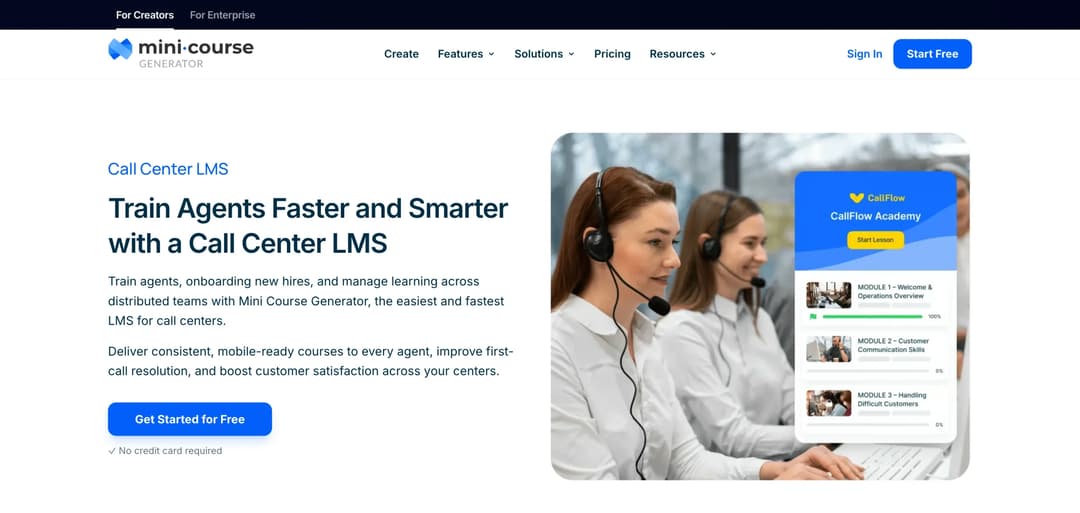
Our product, so judge this entry hardest. Mini Course Generator is a micro-course LMS: training built as short, interactive modules that agents complete “between calls or during shifts” rather than in portal marathons. Courses combine quizzes, role-play scenarios, scripts, and checklists. AI assistance builds a working module in minutes, which matters when a policy changes on Tuesday and the floor needs it by Wednesday.
The call-center angle is delivery. Courses embed where agents already work, run on any device, and managers get dashboards for completions, quiz scores, and skill progress, with audit-ready records for compliance modules. For conversation practice, AI role-play activities grade agents against a rubric and export as SCORM to any system.
Honest limits: there’s no call recording, no QA scorecards, and no live-call analytics here; pair it with a Category B tool if coaching from real calls is the goal. Pricing: public plans and a free start with no credit card; a 14-day trial covers a full pilot.
Best for: teams that want training to live inside the agent’s day, and lean operations without an L&D department.
2. TalentLMS: Best Structured LMS for Growing Support Orgs
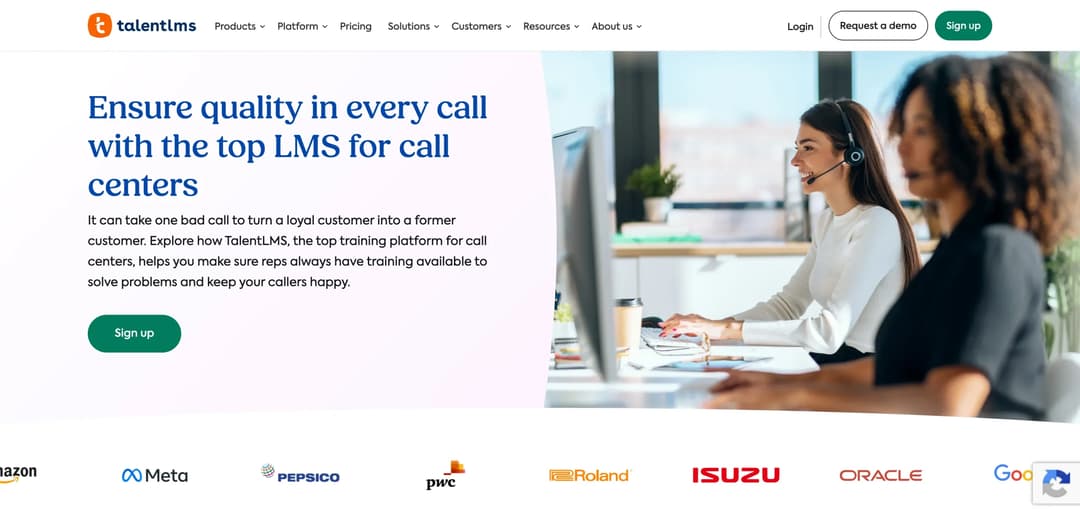
TalentLMS is the most established general-purpose LMS on this list, with a dedicated call-center story. Their line: “It can take one bad call to turn a loyal customer into a former customer.” The pitch is centralization. Scripts, troubleshooting, policies, and product training live in one place, so every agent works from one source. Its flagship proof is Fabletics, which trains agents across 12 countries in 7 languages supporting 5 million members.
It’s also one of only two tools here with full public pricing. The free plan covers 5 users and 10 courses. Paid tiers run Core at $119/month (1-40 users), Grow at $229, and Pro at $449 plus $6 per additional user, with 20% off annually and Enterprise from 1,000 users.
Honest limits: the call-center page covers courses and tracking, not call recording, QA workflows, or simulation; conversation practice needs a Category C partner.
Best for: support organizations that want a classic, structured LMS that scales with headcount and languages.
## 3. iSpring LMS: Best for Compliance and Observed Skills
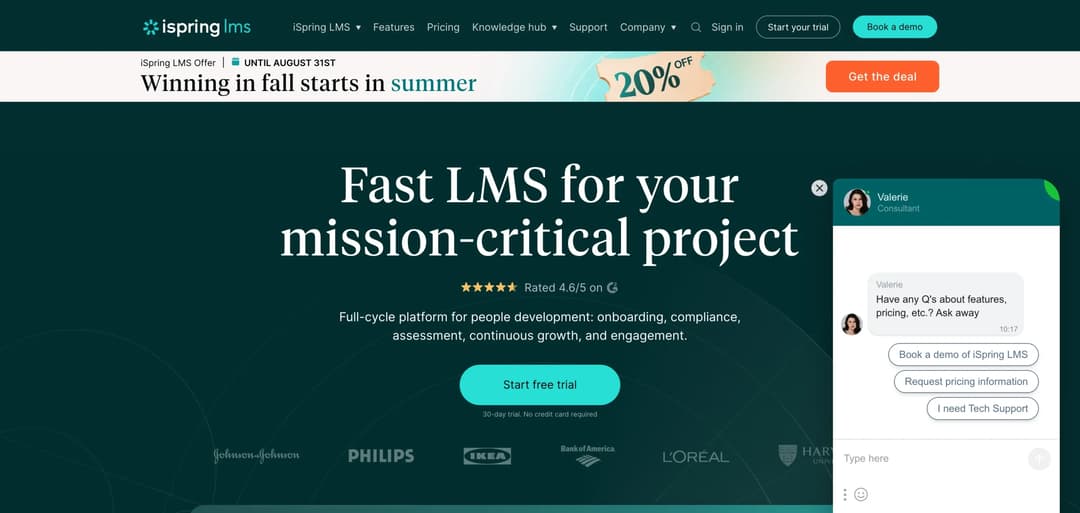
[iSpring LMS](https://www.ispring.com/) sells speed (“start your first iSpring project in 1 day”) plus depth on the two things compliance-heavy centers care about. First, recertification: an “intelligent reenrollment system monitors all certificate validities,” so annual policy training reassigns itself. Second, and rarer, **observation checklists**: supervisors verify how agents apply training in practice, which is the closest thing in the LMS family to side-by-side call evaluation.
Content comes from iSpring AI plus ready-made libraries (their Academy, with Udemy, Go1, and LinkedIn Learning integrations), and native connectors cover Salesforce and BambooHR. Pricing: per active user (“a user is considered active if s/he has logged in at least once during a month”). Actual figures sit behind a demo request, and 100+ user deals are custom.
Honest limits: the platform is a full corporate LMS, which means more setup surface than a micro-course tool; no conversation simulation.
Best for: centers where compliance certificates and observed skill checks drive the training program.
4. SC Training (formerly EdApp): Best for Phone-First, Multilingual Floors
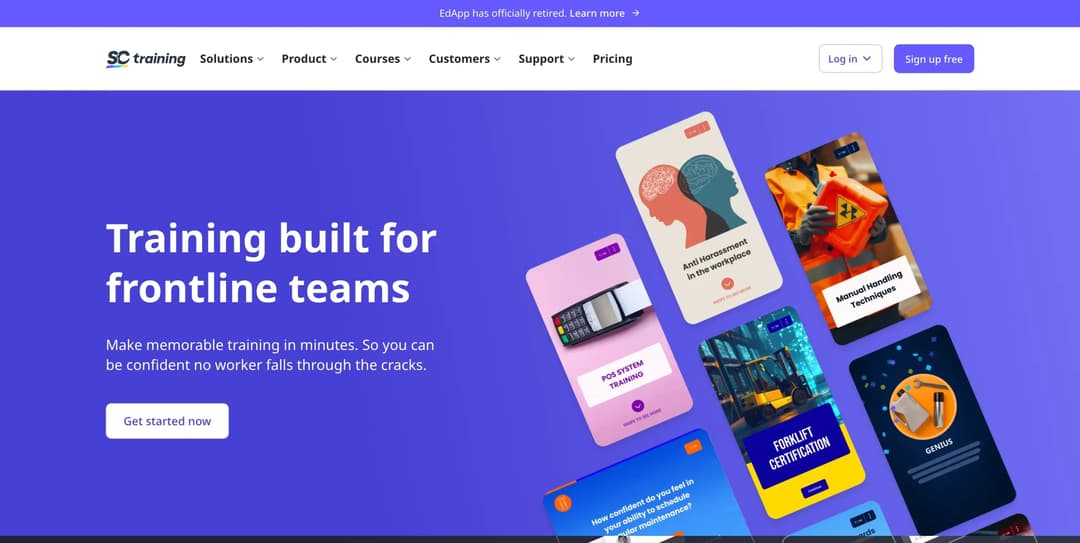
SC Training is the mobile-first microlearning specialist. Lessons run about five minutes, designed for frontline workers’ phones, with an “82% average completion rate” for the format (their figure). For BPO floors and distributed teams, the AI toolset is the draw. Courses generate “in a click.” AI converts the PDFs and PPTs your training already lives in, detects SOPs, and translates into 100+ languages. A 1,000+ course library covers the cold start.
Gamification is native (“make learning feel like a game, not work”), built on spaced repetition, which suits high-turnover floors where engagement is the daily battle.
Honest limits: nothing call-center-specific on the feature level; it’s a frontline generalist. And SC Training doesn’t publish paid pricing: there’s a free sign-up, but no paid figures on its site.
Best for: phone-first agent populations and multilingual floors that need training translated fast.
5. Seismic Learning: Best Inside an Enterprise Enablement Stack
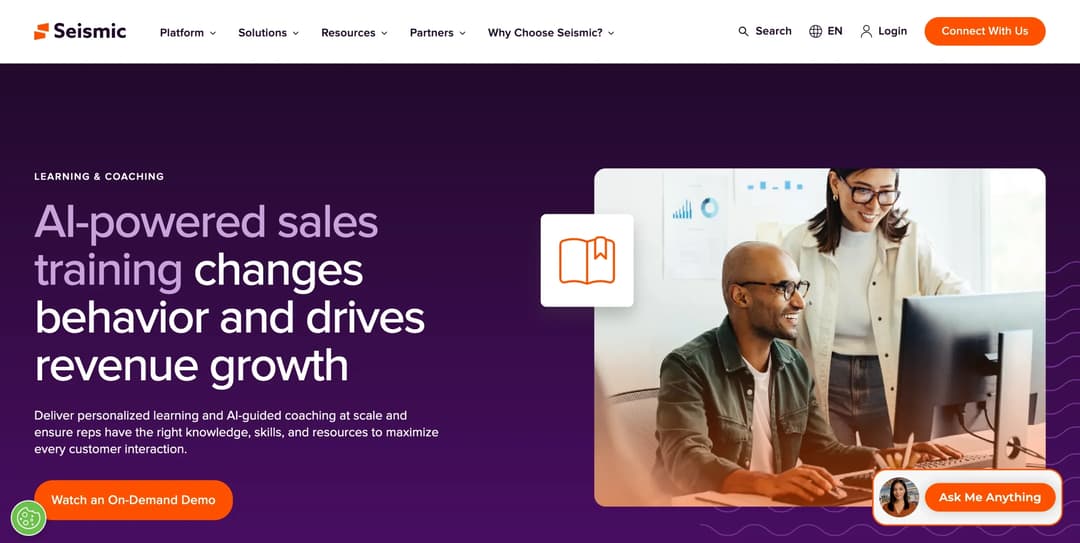
Seismic Learning, the former Lessonly, is the learning-and-coaching layer of Seismic’s enablement platform, used by “approximately 2,000 organizations.” The model blends lessons, practice, and feedback loops. Its call-center guide emphasizes in-the-moment reference: agents pull training content mid-interaction, not after it. Case numbers on the page (47% quicker first opportunity, 58% faster first sale) are vendor case studies. They read as sales-team results that translate to support enablement.
Honest limits: this is an enterprise suite bought as a platform, not a standalone training tool. Pricing is demo-gated, and the learning product’s center of gravity is revenue teams; contact centers are the adjacent case.
Best for: organizations already buying an enablement platform who want learning, coaching, and content in one contract.
6. Centrical: Best for Tying Training to Live Performance Data
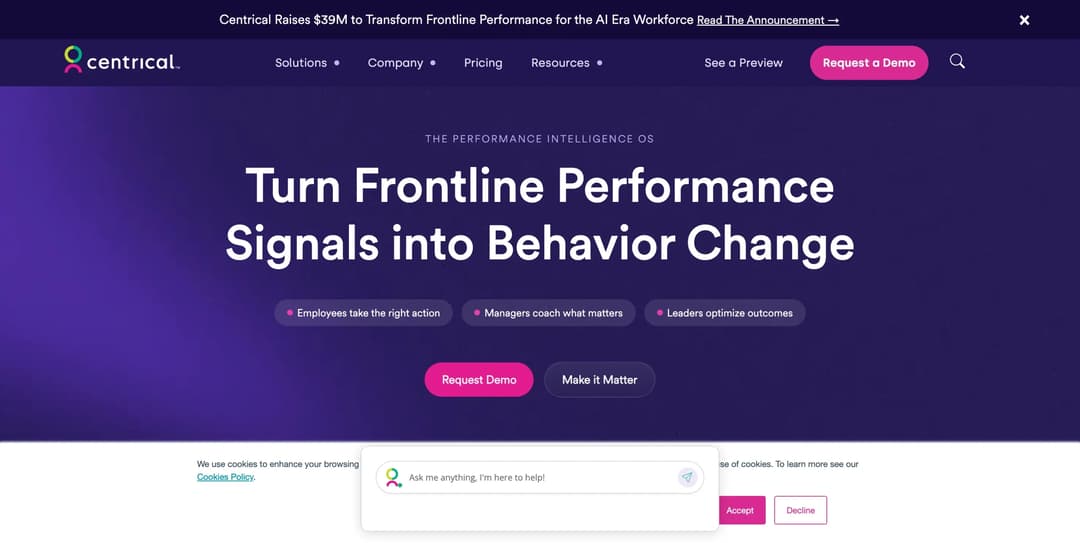
Centrical opens Category B. It’s not an LMS but a “Performance Intelligence OS for the Frontline” that “unifies KPIs, behavioral data, quality trends, and business goals into one view.” Training is performance-triggered: an agent’s quality dip triggers the module that fixes it. AI coaching surfaces “who needs attention” for supervisors. Gamification ties competitions and recognition to performance signals, not course completions. An AI role-play layer with adaptive personas covers practice.
Proof points are enterprise-grade (Samsung, Adidas, Deutsche Telekom, IHG Hotels; Gartner and Frost & Sullivan mentions), and so is the sales motion: pricing is demo-gated.
Honest limits: Centrical assumes you already produce training content and have KPI data flowing; it’s the orchestration layer, not the course library.
Best for: large contact centers that want coaching and microlearning driven by the metrics wall, not a course catalog.
7. Convin: Best for Coaching Built from Real Call Analysis
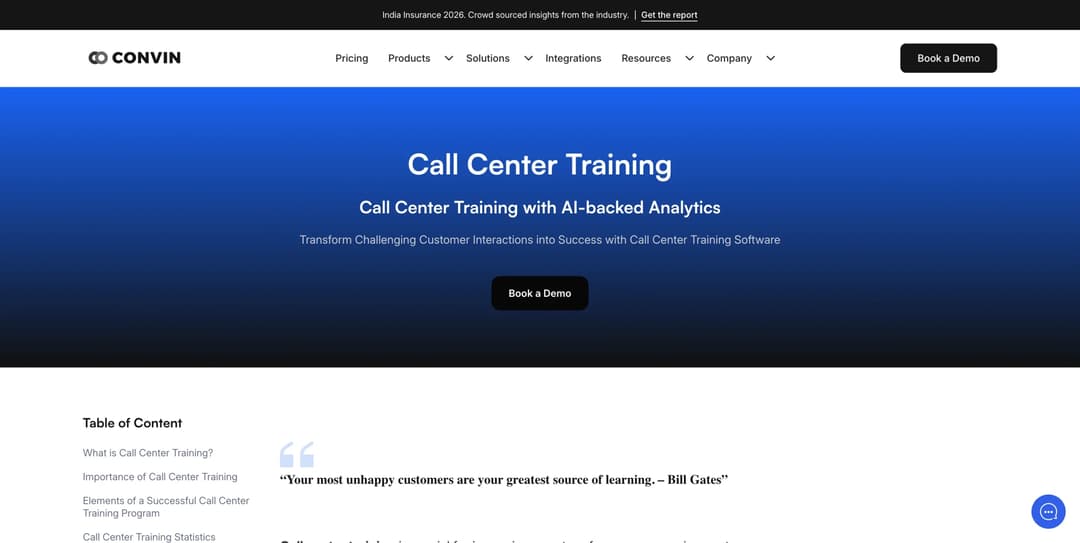
Convin is conversation intelligence turned into a training system. It analyzes real customer calls, scores them against agent scorecards, and generates automated coaching from what it finds. Their framing of the problem is sharp. Managers “dedicate only 7% of their time to deep work like call center training and coaching” (their figure), so Convin automates the finding-what-to-coach half. The headline claim, a “60% decrease in ramp-up time,” is theirs and appears in their own materials.
Honest limits: this is coaching and QA, not course delivery; you’d still author and deliver structured training elsewhere. Pricing is demo-gated, and the company’s footprint is strongest in India-market operations.
Best for: centers that record everything and want coaching priorities to come from actual calls instead of manager intuition.
8. Second Nature: Best Role-Play Layer on Top of Your LMS
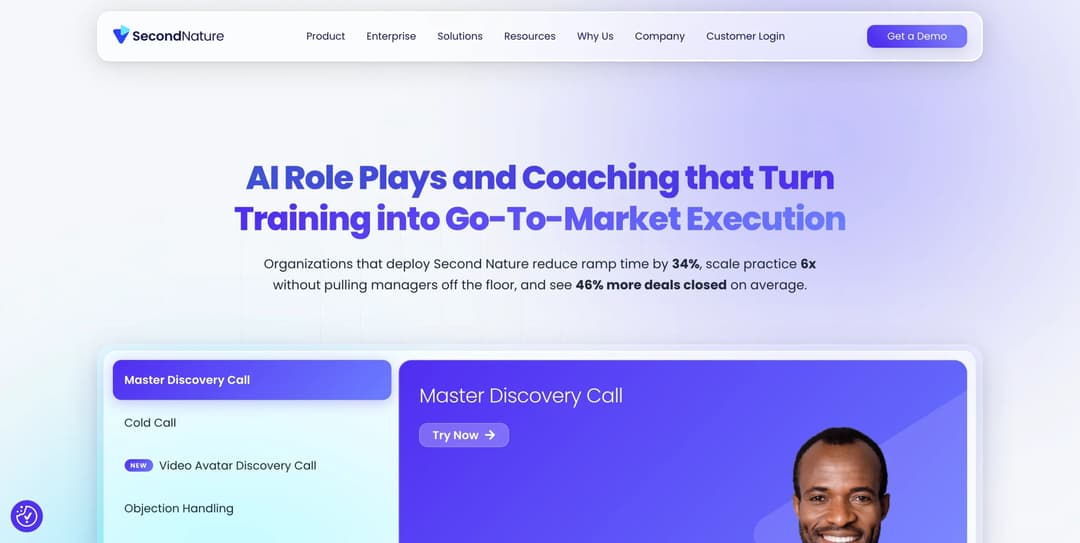
Second Nature opens Category C: conversational AI role-plays. Agents practice “difficult scenarios like escalation, complaints and complex inquiries” against an AI counterpart. Feedback lands in real time; it “flags when the rep launches into solutions too early.” The detail that earns its “best for” label: it “integrates with any LMS via SCORM or LTI.” Simulations slot into the training program you already run instead of replacing it.
Scale claims are vendor-reported: 2,000+ teams, a 34% ramp-time reduction, 4.6+ stars on G2. Pricing is demo-gated.
Honest limits: it’s a practice layer, not a system of record; course delivery, compliance records, and certificates stay in your LMS.
Best for: teams happy with their LMS that want realistic conversation practice added to it.
9. Zenarate: Best for Regulated Enterprise Call Practice
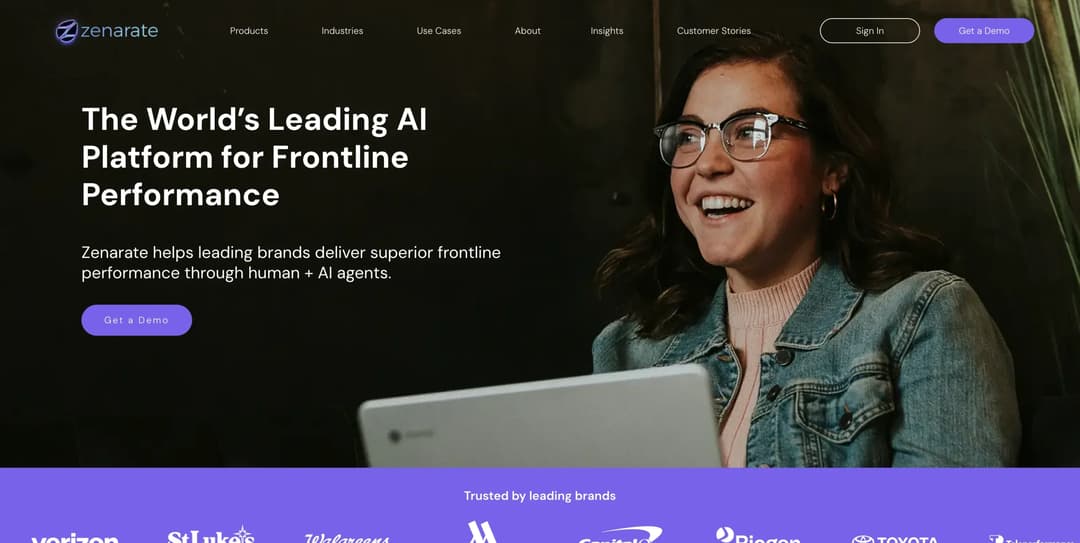
Zenarate is the enterprise heavyweight of AI simulation. It combines “conversation + software simulations” (agents practice the call AND the systems they click through during it) with AutoQA call review and AI tutoring. The customer wall says regulated industries: Nationwide, Comcast, Verizon, Walgreens, Capital One, USAA, CVS. Vendor-reported outcomes: 50% less training time, 40% faster speed to proficiency, 25% lower attrition.
Honest limits: demo-gated, enterprise-shaped, and by design a simulation-first platform; the LMS half of your program lives elsewhere.
Best for: banks, insurers, and healthcare lines where a bad call is a compliance event and practice has to happen before the phones.
10. SymTrain: Best for Practicing Your Real Workflows
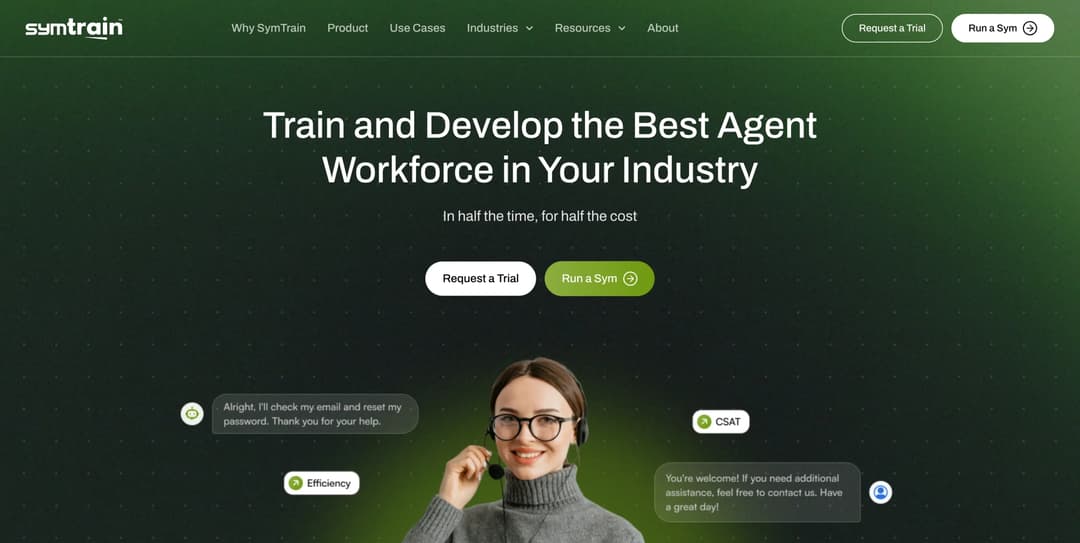
SymTrain‘s wedge is authenticity. It turns “real customer interactions into AI simulations,” so agents rehearse the exact conversations and screens your center handles. Creation is fast; a customer reports “7 minutes from idea to simulation.” The standout feature is Connected Coach. It embeds simulations “into your agent desktop tools” across CCaaS, LMS, PM, and QA systems, putting practice where the between-calls minutes happen. Customers include UnitedHealthcare, T-Mobile, and Mutual of Omaha; reported outcomes (50% faster proficiency, 25% NPS/CSAT lift) are theirs.
Honest limits: contact-center simulation is the whole product; it’s a complement to an LMS, not a replacement, and pricing requires a conversation, though trial access is emphasized.
Best for: centers that want practice reps built from their own real calls and desktops.
What Is a Call Center LMS (and How Is It Different)?
A call center LMS is a learning management system tuned for contact center work. It delivers training as short modules agents complete between calls, tracks completions and quiz scores per agent and team, and keeps the certification records that compliance audits ask for. (For what an LMS is in general, we have a separate guide.)
The difference from a generic corporate LMS is shape, not category. Three things matter on a floor that a campus never sees: sessions must fit queue gaps of a few minutes, authoring must keep up with scripts and policies that change weekly, and training records sit next to QA scores rather than in a separate HR world. That’s the checklist behind every call center LMS evaluation, and it’s why generic platforms with hour-long course players struggle here.
How to Choose a Call Center LMS
Choosing an LMS for call centers, a coach, or a simulator starts from the failure you’re trying to fix, not the feature list:
- “New agents take too long to ramp” → an LMS with fast authoring (Mini Course Generator, TalentLMS, SC Training) plus a simulator if the bottleneck is conversation confidence (Second Nature, Zenarate, SymTrain).
- “Training exists but nobody completes it” → micro-course delivery between calls (Mini Course Generator, SC Training) beats another portal.
- “We can’t see who needs coaching” → coaching software (Centrical, Convin); that’s a data problem, not a content problem.
- “Compliance audits are painful” → recertification automation and audit trails (iSpring LMS, Mini Course Generator).
- “Agents freeze on hard calls” → simulation (Second Nature, Zenarate, SymTrain), and check how each connects to the LMS you keep before buying.
Then run the two-week test: pick one real training need, one team, and one tool per family you’re considering. Free tiers and trials (Mini Course Generator, TalentLMS, SC Training, SymTrain) make this a zero-budget experiment. Measure the only two numbers that matter at pilot scale: did agents complete it between calls, and did the metric you picked move. Broader customer education program design questions come after the tooling works. And if the phones you’re training sit inside a dealership, our automotive LMS guide covers that industry’s full training stack with the same method.
The Short Version
Five LMS platforms, two coaching systems, three simulators. If you need one system of record for training, start with the LMS family and match the shape of your floor. Micro-courses in the agent’s day: Mini Course Generator. Structured scale: TalentLMS. Compliance depth: iSpring LMS. Phones and languages: SC Training. Enablement suite: Seismic. Add coaching software when call data should drive what gets taught, and a simulator when practice matters more than content. Two of ten publish pricing; treat every vendor’s performance number as their claim; and pilot before you buy.
Frequently Asked Questions
What is an LMS in a call center?
A learning management system for a call center stores training courses, assigns them to agents, tracks completions and quiz scores, and keeps certification records for compliance. In practice the good ones deliver training in short sessions agents can finish between calls, and feed completion data to supervisors.
What’s the difference between an LMS, coaching software, and simulation tools?
An LMS delivers and records training content. Coaching software analyzes real calls and turns them into scorecards and feedback priorities. Simulation tools generate practice conversations with AI before agents face customers. They answer different failures, which is why mature centers often run an LMS plus one of the other two.
What are the top 5 LMS platforms for call centers?
The top five LMS for call centers: Mini Course Generator for training inside the agent’s day, TalentLMS for structured scale, iSpring LMS for compliance depth, SC Training for phone-first floors, and Seismic Learning inside enablement stacks. The right pick depends on floor shape more than feature counts.
How much does call center training software cost?
Only a minority of vendors publish prices. As of August 2026, TalentLMS runs from a free 5-user plan to $449/month tiers. iSpring charges per active user with quotes on request. Most coaching and simulation platforms (Centrical, Convin, Second Nature, Zenarate) are demo-gated. Budget conversations start realistic when you ask every vendor the same question: what does year one cost at my seat count?
Can agents really train between calls?
Yes, if the training is built for it. Micro-courses of a few minutes fit the natural gaps in call volume, which is the design premise behind micro-course platforms and mobile-first tools on this list. Hour-long portal courses don’t survive contact with a queue.