
Customer enablement is the coordinated system that gives customers the knowledge, resources, and confidence to succeed with your product on their own. It is not a synonym for customer success: success is the outcome you want, enablement is the machinery that produces it at scale. The machinery is mostly education, and that is good news, because education is the one part you can build without new headcount.
A definition on its own does not tell you what to do on Monday. This guide does more than define the term. It maps the working boundaries between enablement, success, support, and sales enablement. It shows the education-first model in practice, who should own it in a team of five rather than fifty, and a first 30 days you can actually run.
Key Takeaways
- Customer enablement is the system that makes customers capable; customer success is the outcome that follows. Confusing the two is why so many “enablement” programs are just CS with a new name.
- The core of enablement is education. A 2024 Forrester Consulting study commissioned by Intellum found formalized customer education lifts adoption of trained products by 38.3% and cuts support costs by 15.5%.
- The gap enablement fills is measured: 73% of customers try self-service, but only 14% of issues fully resolve there (Gartner, 2024).
- Small teams do not need an enablement department. They need one owner, one loop, and delivery inside the product and support channels customers already use.
- Measure enablement in three layers: engagement, behavior change, business outcomes. Engagement alone is vanity.
What Is Customer Enablement?
Customer enablement is the coordinated effort to give customers the skills, resources, and confidence to get value from your product independently. It spans structured education (courses, certifications), self-service resources (docs, help centers), and the delivery systems that put both in front of the right customer at the right moment.
The word “enablement” earns its place through the word “independently”. Support answers a customer’s question. Enablement makes the customer capable of not needing to ask. One resolves incidents; the other builds competence that prevents whole classes of incidents.
In general business usage, enablement means equipping a group to perform a job on their own. Sales enablement equips sales reps, partner enablement equips resellers, and customer enablement equips the people who bought your product. Same pattern, different audience. If you hear “enablement” unqualified in a SaaS context, it usually means the customer kind.
Customer Enablement vs. Customer Success, Support, and Sales Enablement
The boundaries matter because they decide who does what. The working map:
| Function | Job | Unit of work | Success looks like |
|---|---|---|---|
| Customer enablement | Make customers capable at scale | Courses, resources, delivery systems | Customers self-serve and adopt without hand-holding |
| Customer success | Drive outcomes for accounts | Relationships, QBRs, escalations | Renewal, expansion, healthy accounts |
| Support | Resolve incidents | Tickets and conversations | Fast, accurate resolutions |
| Sales enablement | Equip your own reps | Internal training and collateral | Reps close better, faster |
Customer success enablement is a phrase you will also meet; it names the same practice seen from the CS side: the systems that let a CS team serve more accounts without more CSMs. When a CS leader says “we need enablement”, they usually mean the education-and-self-service machinery: courses, self-service resources, and the delivery systems that put them in front of customers.
The practical test for any piece of work: if it makes one account healthier, it is customer success. If it makes every future customer more capable, it is enablement. A QBR is success; the onboarding course that makes QBRs shorter is enablement.
Why Enablement Is Urgent Now
Two pressures converged. First, teams are asked to scale without scaling headcount; the CSM-per-account model stops working the moment your customer count grows faster than your hiring plan. Enablement is the standard answer, because a course teaches a thousand customers for the same cost as one.
Second, the self-service bet only half-worked. Gartner found that 73% of customers use self-service at some point, but only 14% of service issues are fully resolved there. Customers want to help themselves; documentation alone does not make them capable. That willingness-capability gap is the enablement mandate. It is the reason programs lean on structured education rather than more help articles; our ticket deflection playbook walks through the support half of the argument.
The upside is also measured. A 2024 Forrester Consulting study commissioned by Intellum found formalized programs lift adoption of trained-on products by 38.3%. The same survey measured 15.5% lower support costs and a 7.6% average revenue improvement. More sourced figures live in our [customer education statistics](/blog/customer-education-statistics/) guide.
The Education-First Enablement Model
Strip enablement to its load-bearing parts and you get a loop, not an org chart:
- Find the capability gaps. Support tickets, onboarding drop-off points, and unused sticky features are your gap map. The tickets already voted on what customers cannot do.
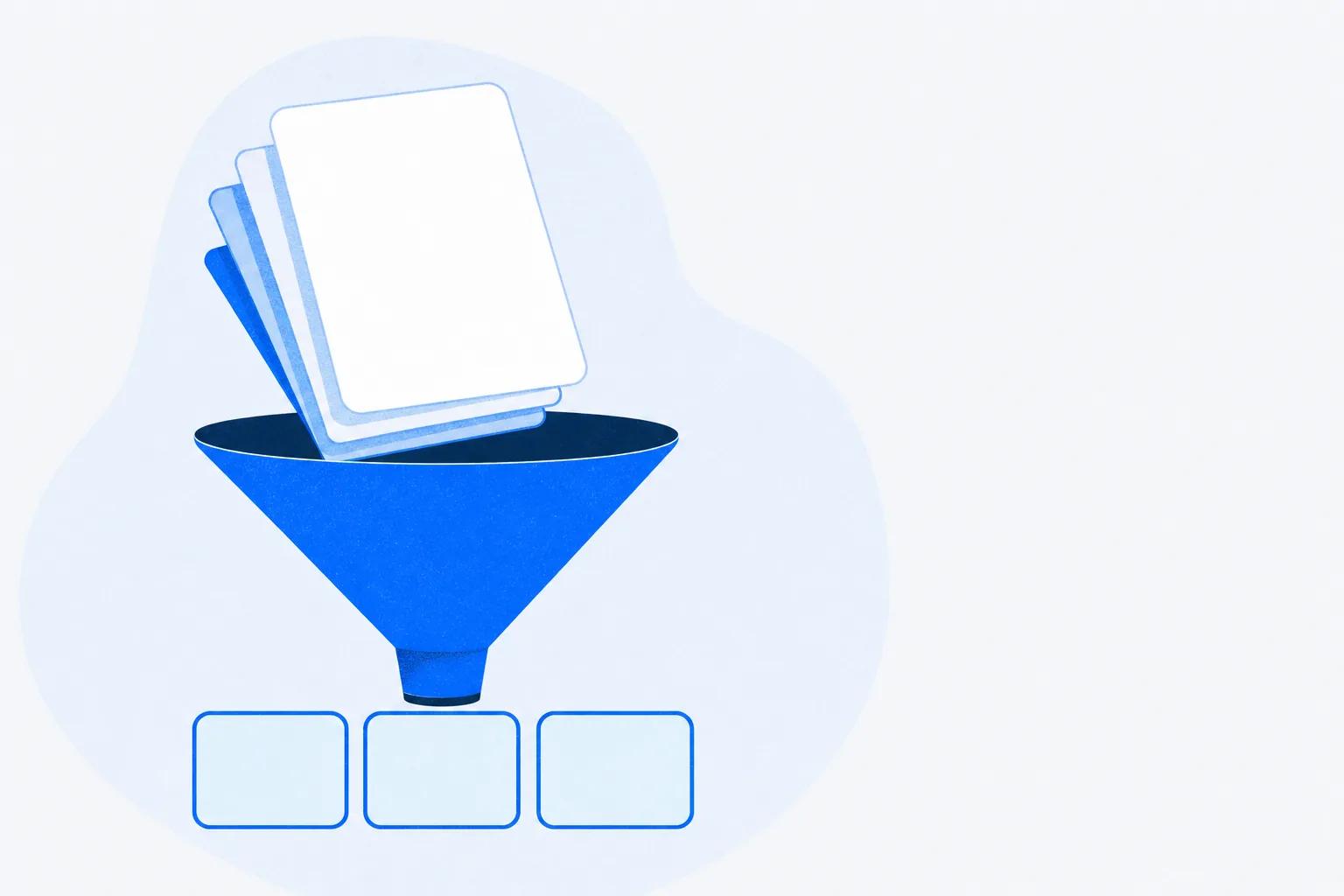
- Build the smallest teaching asset that closes each gap. A five-minute interactive lesson with a quiz beats a webinar recording and a 40-page PDF. Existing docs are the raw material; turning them into a course is now minutes of work, not weeks.
- Deliver inside the customer’s day. The lesson goes where the confusion happens: embedded in the product, in the support Messenger, in the onboarding email. A portal customers must remember to visit is where enablement content goes to be forgotten.
- Verify capability, not attendance. A completed quiz proves the customer can; a pageview proves nothing. Verified understanding is the difference between enablement and content marketing.
- Measure the downstream metric and repeat. The ticket class shrinks, the feature gets adopted, the next gap moves to the top of the list.
This is deliberately the same loop that powers a customer education program; enablement adds the surrounding system: self-service resources, community, and the delivery rails. Education is the engine, and the engine is most of the car.
Enablement Across the Lifecycle
Onboarding. The enablement job is time-to-first-value. One role-based course per audience (admin, end user), delivered in the welcome flow, with a quiz that confirms setup actually happened. The measurable: activation rate and the “how do I get started” ticket class.
Adoption. The job is sticky-feature usage. Short feature courses trigger by context. The customer opens the reporting module for the first time, and the two-minute reporting lesson appears in the corner or in the Messenger via the MCG App for Intercom. The measurable: adoption of trained features, which the Forrester/Intellum data pegs at +38.3% on average.
Renewal and expansion. The job is champion durability. Certifications give your power users credentials worth keeping current, and an always-on onboarding course insures the account against your champion changing jobs. The measurable: trained-account retention versus untrained, read directionally (motivated customers both train more and renew more; do not claim causation your cohort data cannot carry).
Who Owns Customer Enablement?
In a large company, ownership models vary: education-led, CS-operations-led, or a cross-functional owner. In a small company, the honest answer is simpler: one named owner, part-time, with a loop. The title matters less than the naming; unowned enablement decays into a folder of stale PDFs by month six.
The lean operating model that works: the owner runs the loop above one gap at a time. Subject-matter experts hand over raw material; AI drafting turns it into course form in minutes; support flags new repeat questions; product flags changes that invalidate content. One owner plus that loop consistently outperforms a five-person team without it. When the program grows, the owner role formalizes into the customer education manager position described in our customer education guide.
Measuring Enablement
Three layers, in order of increasing executive interest:
- Engagement: enrollments, completions, quiz pass rates. Necessary, insufficient, easy to inflate.
- Behavior change: feature adoption after training, repeat-ticket classes shrinking, time-to-value falling. This is where enablement proves it changed something.
- Business outcomes: retention, expansion, support cost per customer. Slow-moving, confounded, and still the numbers leadership funds.
The bridge between the first and second layer is verified understanding: quiz-validated knowledge per customer, which turns “they watched” into “they can”. The full framework, including what to ignore and the benchmark honesty rules, lives in our customer education metrics guide.
Your First 30 Days of Customer Enablement
A concrete starting plan, sized for a team with no spare headcount:
- Week 1 – map. Tag 90 days of support tickets; pick the top three capability gaps. Note the one sticky feature with the worst adoption.
- Week 2 – build. Turn existing docs into three short verified courses with customer training software built for that loop. Resist the portal project; you need lessons, not architecture.
- Week 3 – deliver. Put each course where its gap occurs: onboarding flow, in-product embed, support Messenger. Zero new logins.
- Week 4 – measure and decide. Read completions, pass rates, and the tagged ticket classes. Whatever moved, do more of; whatever did not, redesign delivery before redesigning content, because distribution fails more often than lessons do.
Thirty days is enough to know whether the loop works in your product. It usually is also enough to earn the budget conversation for what comes next.
Conclusion: Enablement Is a System, Not a Department
Customer enablement is the system that makes customers capable. Education sits at the core, self-service around it, delivery inside the customer’s day, and verification instead of vanity metrics. Success is the outcome; enablement is the machinery. The machinery no longer requires a department, because the expensive part, content production, collapsed with AI authoring, and the hard part was always delivery discipline rather than tooling.
Start with three gaps, three courses, and thirty days. The customer training software side of the stack takes an afternoon to stand up. The loop takes a quarter to prove, and the capability it builds compounds for as long as you run it.
Frequently Asked Questions
What is customer enablement?
Customer enablement is the coordinated system that gives customers the knowledge, resources, and confidence to succeed with your product independently. It combines structured education, self-service resources, and delivery mechanisms that reach customers inside their workflow, and it exists to build competence rather than to resolve individual incidents.
What is the difference between customer enablement and customer success?
Customer success is the outcome: accounts achieving value, renewing, and expanding. Customer enablement is the system that produces that outcome at scale: the courses, resources, and delivery rails that make customers capable without one-to-one attention. A QBR is success work; the course that makes the QBR shorter is enablement work.
What is customer success enablement?
Customer success enablement is the same practice named from the CS team’s perspective: the education and self-service machinery that lets CS serve more accounts without proportionally more CSMs. In most companies it is interchangeable with customer enablement, and it is usually the phrase CS leaders use when requesting the investment.
What does enablement mean in business?
In business, enablement means systematically equipping a group to perform on their own. Sales enablement equips sales reps with training and collateral, partner enablement equips resellers, and customer enablement equips customers to use what they bought. The common thread is building capability rather than doing the work for the audience.
How do you measure customer enablement?
In three layers: engagement (enrollments, completions, quiz pass rates), behavior change (feature adoption after training, shrinking repeat-ticket classes, time-to-value), and business outcomes (retention, expansion, support cost per customer). Verified understanding through quizzes is the bridge; engagement metrics alone are vanity.