As B2B companies grow, partners become more than just a distribution channel. Resellers, agencies, implementation partners, and technology partners increasingly act as an extension of sales, customer success, and even product teams.
Yet many companies struggle to unlock real value from their partner ecosystems, not because partners lack potential, but because onboarding is weak.
B2B partner onboarding is often treated as a one-time task. In reality, it’s a system that directly affects revenue velocity, brand consistency, partner performance, and internal operational efficiency.
This article explains what B2B partner onboarding really is, why it matters more than most teams realize, and how modern companies scale it effectively using tools like Mini Course Generator.
What Is B2B Partner Onboarding?
B2B partner onboarding is the structured process of enabling partners to successfully sell, implement, or support your product, independently.
Unlike employees, partners:
- Don’t share your internal context
- Work across different markets and time zones
- Often represent multiple vendors simultaneously
That means onboarding cannot rely on ad-hoc calls or scattered documentation. It must be clear, self-serve, and outcome-focused.
At its best, partner onboarding answers one critical question:
“What do I need to learn and do to become successful with this product as quickly as possible?”
Why Partner Onboarding Is a Critical Growth Lever
Strong partner onboarding has a measurable business impact.
HubSpot highlights that well-enabled partners close deals faster and represent products more accurately because they clearly understand positioning, use cases, and buyer value.
From a growth perspective, onboarding quality directly affects:
- Time-to-first-deal
- Deal quality and close rates
- Brand and messaging consistency
- Support load from partner questions
When onboarding is unstructured, partners take longer to activate, rely heavily on internal teams, and often disengage before delivering meaningful results.
The Real Cost of Poor Partner Onboarding
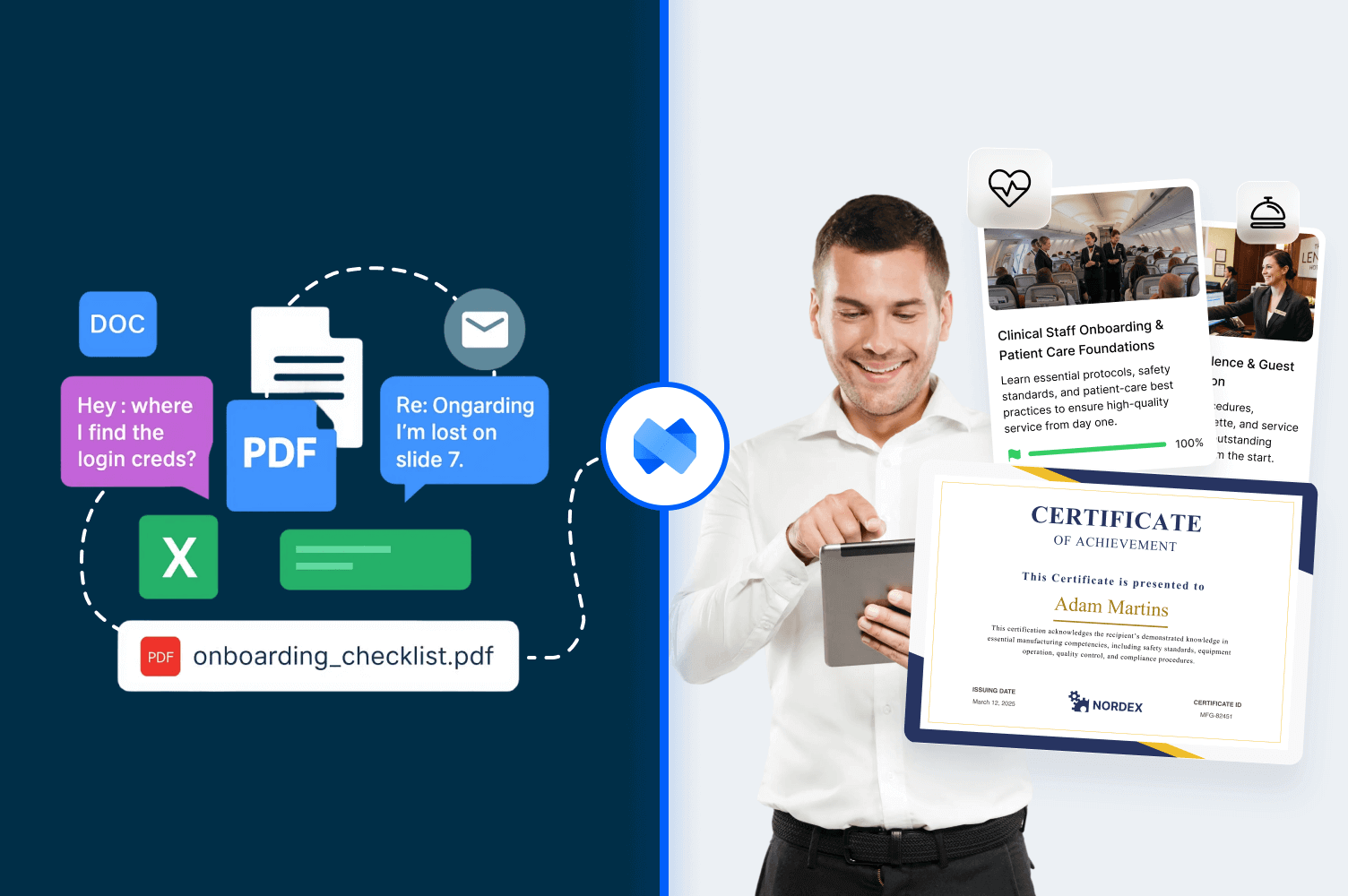
Many companies rely on shared folders, PDFs, or generic LMS courses designed for internal training. While documentation is important, it rarely provides prioritization or clear learning paths.
Another common issue is treating onboarding as a one-time event. Products evolve constantly, features change, pricing updates, and messaging shifts. Without continuous enablement, partners quickly fall out of sync.
The result is predictable:
- Slower partner activation
- Inconsistent product positioning in the market
- Increased manual workload for sales and customer success teams
What Scalable Partner Onboarding Actually Looks Like
High-performing B2B companies treat partner onboarding as a product, not a checklist.
Instead of overwhelming partners with everything at once, onboarding is designed around real outcomes:
01
Closing the first deal
02
Delivering the first successful implementation
03
Supporting customers without escalation
Learning paths are role-based, focused, and easy to revisit. Partners don’t need to learn everything. They need to learn what matters now.
This approach transforms onboarding from information delivery into enablement.
Why Traditional LMS and Documentation Fall Short
Traditional LMS platforms are built for internal teams, long courses, and compliance-driven training. Partner onboarding requires a different approach:
Short, focused learning experiences
Fast updates as products evolve
Self-serve access without friction
Clear alignment with real-world use cases
Static documentation lacks structure and engagement. Long courses lack flexibility. That gap is where modern enablement tools become essential.
How Mini Course Generator Enables Scalable Partner Onboarding
This is where Mini Course Generator (MCG) fits naturally into partner onboarding workflows.
MCG allows teams to create partner training modules including role-specific mini-courses for different partner types such as sales partners, implementation partners, or strategic partners without building long or complex training programs.
🤝 Sales Partners
⚙️ Implementation Partners
🌟 Strategic Partners
Instead of one generic onboarding flow, partners move through focused, outcome-driven learning paths aligned with real partner activities. Because courses are modular, updating onboarding as your product evolves is fast and simple.
Most importantly, MCG helps reduce manual enablement. Teams move from repeating the same explanations on calls to offering structured onboarding paths that partners can complete independently at their own pace.
From Onboarding to Ongoing Partner Enablement
Effective partner onboarding doesn’t stop after the first week. As products, pricing, and messaging evolve, partners need continuous access to updated knowledge.
By using short, focused mini-courses instead of static documentation, companies ensure partners stay aligned over time without increasing internal workload.
This shift turns onboarding into a long-term enablement system rather than a recurring operational burden.
Partner Onboarding Is No Longer Optional
As partner ecosystems grow, the absence of a structured onboarding system becomes a bottleneck. Companies that invest in partner onboarding early see:
- Faster partner activation
- More consistent market messaging
- Lower internal support costs
- Stronger, longer-lasting partnerships
The difference isn’t more content. It’s better enablement design.
If you’re looking to scale your partner program without scaling manual effort, modern onboarding systems supported by tools like Mini Course Generator offer a clear path forward.